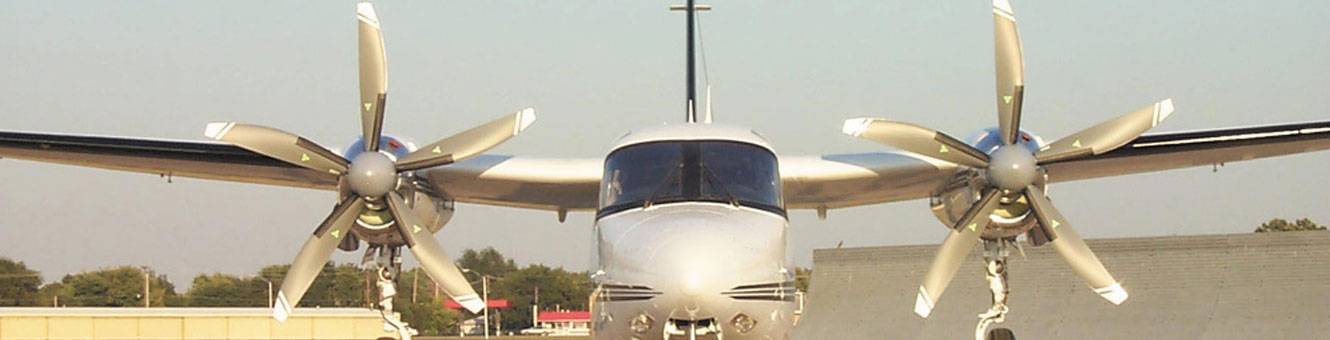
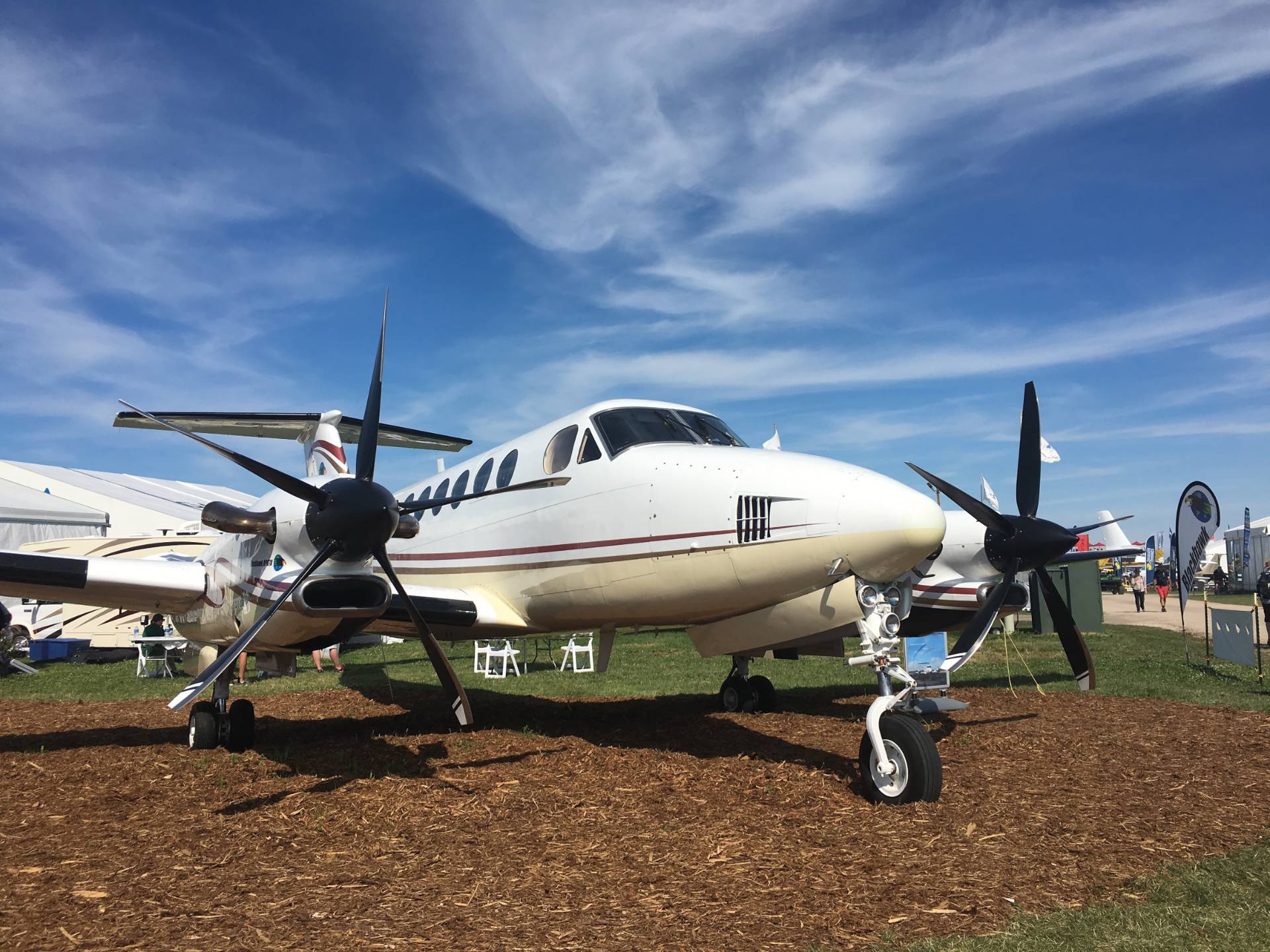
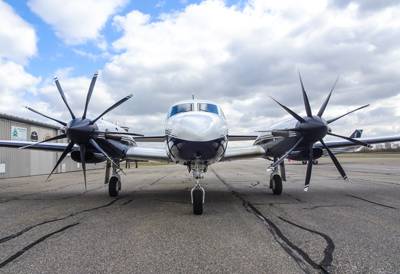
Beech King Air 200 and 300 5-blade MTV-27
With the MT Props, we never once had to change a blade at prop overhaul
-----
... I was the Director of Maintenance for Meta Special Aerospace (formerly Commuter Air Technology, now Metrea) from 2010 through 2022. During my tenure, my fleet of Intelligence, Surveillance, and Reconnaissance (ISR) aircraft amassed 133,000+ aircraft flight hours. We transitioned the fleet to MT propellers beginning sometime around 2014 and logged 180,000 propeller flight hours operating in harsh environments and out of airfields that left a bit to be desired all throughout North Africa, Afghanistan, The Philippines, and the United States. The fleet consisted of King Air B200's and B300's and our monthly utilization per aircraft overseas regularly exceeded 225 hours per month.
Initially, I was an opponent of moving away from our Hartzell 4-bladed aluminum propellers and installing these natural composite 5-bladed MT Props. I did not believe that they had the durability necessary... boy, I was wrong.
* With the old aluminum propellers, I could count on having to replace all four blades at every-other propeller overhaul. The blades would simply be worn from constant blending to remove FOD damage.
With the MT Props, we never once had to change a blade at prop overhaul. The MT props are smaller in diameter than the aluminum propellers, which means that they are further from the ground during ground operations, which means that they pick up exponentially less FOD during high power and prop reverse.
This is not to say that FOD blowing around is completely eliminated, but what FOD did strike the blades simply bounced off of the blades the majority of the time. On the few occasions that we would sustain damage, it was normally in the form of a shallow dent that is easily repaired per the maintenance manual with a two-part epoxy.
* Another advantage to less FOD being blown upward by the props is that we dramatically reduced the number of first stage compressor replacements of the engines at overhaul.
* The MT Props, having the reduced diameter but the same RPM, are much quieter due to the propeller tip speeds being much lower. I am sure that I do not have to tell you about all of the advantages that can bring.
* Inspection times were reduced due to these MT Props not needing blending or regular servicing with grease.
* The prop de-ice issues of failed wiring and/or de-ice boots remains about the same compared to an aluminum prop.
* Later in the program, I helped to develop an STC for the King Air B300 that eliminated the goofy Ground Fine system with all of it's rigging issues, solenoids, and switches. This is because the MT Props (unlike the aluminum props) have no low-RPM limitations. This STC is still available and simply eliminates many of the unnecessary parts.
* You mentioned blade trailing edge erosion and delamination; I never experienced either. I heard rumors about that, but my understanding is that was a minor issue on earlier MT Props that were installed on piston engine aircraft. The only issue that we ever had with the composite blades themselves was a short serial number range of props that were delivered new and the paint did not stick well on the blades. This caused no operational issues... it just looked ugly. We worked with MT Propeller and they rectified the issue on future propellers.
* It wasn't all rainbows and unicorns; The biggest issue that we had was that the MT Props started to sling grease from the blade roots starting just before mid-life (around 2,250 hours). We worked with MT and found that this was a result of the blade root o-ring wearing over time. To alleviate this, I instituted an internal "Propeller mid-life inspection/sealing" recommendation. We would just choose a convenient maintenance event near the mid-life mof the prop and remove the blades, clean everything, install new grease, install new o-rings, reinstall the blades, and perform a dynamic balance. The MT Prop design allows this to be accomplished on-wing and normally takes an experienced technician about a day per prop to accomplish. That's it. That was the biggest "problem".
* I did have to change a few blades on-wing over these 180,000+ propeller hours:
* Once from a runaway toolbox that hit a stationary propeller.
* Once from a fuel truck that struck a stationary propeller.
* Once when we shredded a NLG tire during takeoff and the majority of that tire went through the left prop. One blade separated near the root and another blade was cracked at about mid span. The resulting imbalance caused the engine to vibrate violently enough that the rear AGB case on that PT6 struck a part of the engine truss and had a hole worn through it. The nice thing is that the engine repair station found nothing wrong inside of the power section resulting from the impact to the blades. The other three blades and the hub from that propeller were returned to service after the unscheduled overhaul.
* Once a prop de-ice relay stuck in the on position, resulting in all of the de-ice boots overheating. We removed the blades and sent them in to MT thinking that they would all be scrapped due to heat damage. Instead, MT inspected the blades thoroughly and they were returned to service.
I have the highest regard for the MT Propellers due to their reduction in maintenance and operational costs, the reduction in aircraft downtime, and their overall durability. MT Prop has a wide network of service providers and customer support. I highly recommend that all operators consider these props for their operations. ...
-----
... I was the Director of Maintenance for Meta Special Aerospace (formerly Commuter Air Technology, now Metrea) from 2010 through 2022. During my tenure, my fleet of Intelligence, Surveillance, and Reconnaissance (ISR) aircraft amassed 133,000+ aircraft flight hours. We transitioned the fleet to MT propellers beginning sometime around 2014 and logged 180,000 propeller flight hours operating in harsh environments and out of airfields that left a bit to be desired all throughout North Africa, Afghanistan, The Philippines, and the United States. The fleet consisted of King Air B200's and B300's and our monthly utilization per aircraft overseas regularly exceeded 225 hours per month.
Initially, I was an opponent of moving away from our Hartzell 4-bladed aluminum propellers and installing these natural composite 5-bladed MT Props. I did not believe that they had the durability necessary... boy, I was wrong.
* With the old aluminum propellers, I could count on having to replace all four blades at every-other propeller overhaul. The blades would simply be worn from constant blending to remove FOD damage.
With the MT Props, we never once had to change a blade at prop overhaul. The MT props are smaller in diameter than the aluminum propellers, which means that they are further from the ground during ground operations, which means that they pick up exponentially less FOD during high power and prop reverse.
This is not to say that FOD blowing around is completely eliminated, but what FOD did strike the blades simply bounced off of the blades the majority of the time. On the few occasions that we would sustain damage, it was normally in the form of a shallow dent that is easily repaired per the maintenance manual with a two-part epoxy.
* Another advantage to less FOD being blown upward by the props is that we dramatically reduced the number of first stage compressor replacements of the engines at overhaul.
* The MT Props, having the reduced diameter but the same RPM, are much quieter due to the propeller tip speeds being much lower. I am sure that I do not have to tell you about all of the advantages that can bring.
* Inspection times were reduced due to these MT Props not needing blending or regular servicing with grease.
* The prop de-ice issues of failed wiring and/or de-ice boots remains about the same compared to an aluminum prop.
* Later in the program, I helped to develop an STC for the King Air B300 that eliminated the goofy Ground Fine system with all of it's rigging issues, solenoids, and switches. This is because the MT Props (unlike the aluminum props) have no low-RPM limitations. This STC is still available and simply eliminates many of the unnecessary parts.
* You mentioned blade trailing edge erosion and delamination; I never experienced either. I heard rumors about that, but my understanding is that was a minor issue on earlier MT Props that were installed on piston engine aircraft. The only issue that we ever had with the composite blades themselves was a short serial number range of props that were delivered new and the paint did not stick well on the blades. This caused no operational issues... it just looked ugly. We worked with MT Propeller and they rectified the issue on future propellers.
* It wasn't all rainbows and unicorns; The biggest issue that we had was that the MT Props started to sling grease from the blade roots starting just before mid-life (around 2,250 hours). We worked with MT and found that this was a result of the blade root o-ring wearing over time. To alleviate this, I instituted an internal "Propeller mid-life inspection/sealing" recommendation. We would just choose a convenient maintenance event near the mid-life mof the prop and remove the blades, clean everything, install new grease, install new o-rings, reinstall the blades, and perform a dynamic balance. The MT Prop design allows this to be accomplished on-wing and normally takes an experienced technician about a day per prop to accomplish. That's it. That was the biggest "problem".
* I did have to change a few blades on-wing over these 180,000+ propeller hours:
* Once from a runaway toolbox that hit a stationary propeller.
* Once from a fuel truck that struck a stationary propeller.
* Once when we shredded a NLG tire during takeoff and the majority of that tire went through the left prop. One blade separated near the root and another blade was cracked at about mid span. The resulting imbalance caused the engine to vibrate violently enough that the rear AGB case on that PT6 struck a part of the engine truss and had a hole worn through it. The nice thing is that the engine repair station found nothing wrong inside of the power section resulting from the impact to the blades. The other three blades and the hub from that propeller were returned to service after the unscheduled overhaul.
* Once a prop de-ice relay stuck in the on position, resulting in all of the de-ice boots overheating. We removed the blades and sent them in to MT thinking that they would all be scrapped due to heat damage. Instead, MT inspected the blades thoroughly and they were returned to service.
I have the highest regard for the MT Propellers due to their reduction in maintenance and operational costs, the reduction in aircraft downtime, and their overall durability. MT Prop has a wide network of service providers and customer support. I highly recommend that all operators consider these props for their operations. ...
Nic Hawker
.png)